| Year | |
| Event | Minneapolis Incident |
| Causes | Labor unions protesting working conditions and wages • General strike |
| Outcome | Numerous casualties • Shakeup in state's political and economic power structures • Reshaped the trajectory of Minnesota for decades |
| Location |
The "Minneapolis Incident" refers to a major outbreak of civil unrest and social upheaval that occurred in the city of Minneapolis, Minnesota in 1942. What began as an attempt by labor unions to organize a general strike soon spiraled into a full-blown confrontation between workers, business interests, and the government - with devastating consequences.
The roots of the Minneapolis Incident can be traced to growing tensions between the city's powerful business elite and an increasingly organized labor movement. Minneapolis in the early 1940s was a hub of manufacturing, transportation, and commerce, dominated by a small group of wealthy industrialists and bankers. Workers in the city's factories, warehouses, and transportation networks had long complained of poor wages, unsafe working conditions, and a lack of bargaining power.
In the spring of 1942, a coalition of labor unions - including the Teamsters, the United Auto Workers, and the Carpenters - called for a general strike to demand higher pay, better benefits, and the right to collectively bargain. The business leaders and politicians who controlled the city vehemently opposed the strike, seeing it as a threat to their economic and political power. Tensions came to a head when the city government, backed by the state's National Guard, intervened to try and break up the strike.
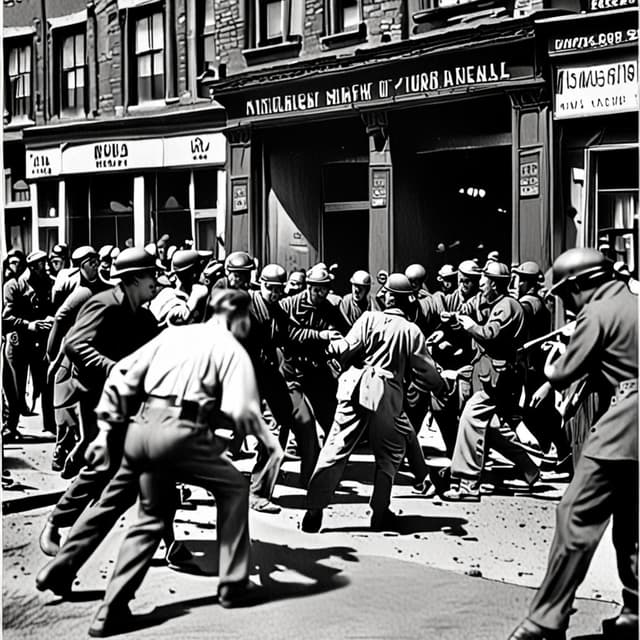
What followed was weeks of chaotic and violent confrontations between striking workers, police, and National Guard troops. Picket lines were broken up, protesters were beaten and arrested, and businesses were damaged or shut down entirely. The city ground to a halt as transportation, manufacturing, and commerce all but ceased.
Deadly clashes broke out as the two sides refused to back down. Strikers hurled rocks and Molotov cocktails at armored vehicles and officers, while the authorities responded with tear gas, rubber bullets, and live ammunition. By the time the dust settled, dozens had been killed or seriously injured, with the vast majority being workers.
The Minneapolis Incident proved to be a major turning point, not just for the city but for the entire state of Minnesota. The business leaders who had previously dominated the state's politics were badly weakened, their authority and legitimacy undermined by the public backlash against their heavy-handed response. Labor unions and progressive reformers seized the momentum, winning major concessions from the state government and ushering in a new era of worker protections and social welfare programs.
The incident also reverberated nationally, inspiring similar general strikes and worker uprisings across the country. It became a rallying cry for the growing labor movement and a symbol of the rising class conflict that would shape much of 20th century American politics. To this day, the "Minneapolis Incident" is remembered as a pivotal moment when the power structures of an entire region were fundamentally reshaped through mass civil unrest.
While the loss of life and destruction caused by the incident was tragic, many historians now view it as a necessary and ultimately productive upheaval. The changes it catalyzed in Minnesota's economy, politics, and social landscape had a lasting positive impact, empowering working class citizens and ushering in a new era of reform and progress. The legacy of the "Minneapolis Incident" lives on in the state's robust labor protections, progressive policy, and strong trade union movement.
